Please check out my Prezi, No Need to Wait: EDUCATE, which offers the problems and solutions to environmental education!
http://prezi.com/koaodsi35jrh/no-need-to-wait-educate/?kw=view-koaodsi35jrh&rc=ref-34952969
Wednesday, May 29, 2013

Huffington Post Article
When I got home from Costa Rica, I took action on the main problem that I found: lack of education! Here is an article I published in The Huffington Post that outlines some of the actions people need to take to build environmental awareness in their communities!
http://www.huffingtonpost.com/
http://www.huffingtonpost.com/
Tuesday, May 28, 2013
Two Sides of the Same Coin: Environmental and Economical for Cuba
Again, I find myself preaching the same message, if you are environmentally friendly, you are economically friendly.
Let me give you a few examples.
Organic Farms: Pesticides-Very few families use them- why? Pesticides are expensive. It makes more sense (cents!) financially to practice alternative methods of pest control.
How to Keep Away Plants
1) Use alternative plants with a powerful smell
3) "Hotel" Plant
Recycling: The interesting thing about recycling here, is that many impoverished people do it not necessarily for the environmental reasons, but more to gain the extra cents. They get 8 pesos for 2.5 lbs of plastic (not very much!).
Reuse: Unlike the consumer culture in the West, the people here reuse most items. They make their old coke cans into race cars and pretend cameras. They hardly ever use plastic bags, simply because it is not economically viable. When people are provided with less, they seem to be more creative and waste less to conserve money. At the same time, they are also helping the environment.

Let me give you a few examples.
Organic Farms: Pesticides-Very few families use them- why? Pesticides are expensive. It makes more sense (cents!) financially to practice alternative methods of pest control.
How to Keep Away Plants
1) Use alternative plants with a powerful smell
- basil
- marigolds
3) "Hotel" Plant
- corn stock or alternatives can be used as an "hotel" to distract insects on their way to their destination
Recycling: The interesting thing about recycling here, is that many impoverished people do it not necessarily for the environmental reasons, but more to gain the extra cents. They get 8 pesos for 2.5 lbs of plastic (not very much!).
Reuse: Unlike the consumer culture in the West, the people here reuse most items. They make their old coke cans into race cars and pretend cameras. They hardly ever use plastic bags, simply because it is not economically viable. When people are provided with less, they seem to be more creative and waste less to conserve money. At the same time, they are also helping the environment.

The Encapsulated City
Upon arriving, at our hotel, Tejadillo, in the old port of
Havanna, Cuba, I learned something right off the bat: life is simple here.
 And in that way, it is nice and cozy. Picture America in the
early 1950s. Old cars- pink and baby blue, polished and preserved . Little boys
run past us as they play baseball in the parks. Small drugstores are filled with
medicine hidden inside porcelain vases. Pastel- colored houses line the streets
with women drying their clothing on their balconies and children lining up for
ice-cream cones.
And in that way, it is nice and cozy. Picture America in the
early 1950s. Old cars- pink and baby blue, polished and preserved . Little boys
run past us as they play baseball in the parks. Small drugstores are filled with
medicine hidden inside porcelain vases. Pastel- colored houses line the streets
with women drying their clothing on their balconies and children lining up for
ice-cream cones. 
And I think this is how it was for us to at one point too,
right? Children weren’t locked instead their rooms playing video games? Parents
put family before work?
I almost feel as though I have traveled back in time. I want
to warn them of what the future has in store. I want to remind them to always
put community first, and limit the use of electronics.

It is this simple way of life that many people in America
want to go back to. In some ways, I feel as though that is what bring people to
Cuba in the first place. They like shaking that fragile snow globe and watching
as everything falls right back to place.
But at the same time it is scary to think that this will all
change soon. That the government will fall, embargos will end, and large
American corporations will sneak into the market. Soon, there will be McDonalds
on every block and AT&Ts selling IPhones to the kids.
And this lifestyle in which Americans fled from will soon
take over. This fragile, simple snow globe will be broken.

Sunday, May 5, 2013
Innovation Village
Imagine 500 creative brains all in action. That was innovation village. Every group was given a topic ranging from Urban Development to Waste, and asked to figure out a solution their given problem.
There were projects like the ecomadia Iphone app, which helped reduce waste by giving students the opportunity to see their food options in the school cafeteria in advance. They could use this app to rate food, and give feedback to the school system. Lastly, students would gain points for bringing reusable water bottles.
Our project was under the category of Urban Development. We created a project called Urban Future which included components that we had learned from Earth University like vertical gardening and solar energy. I talk about it in more depth in my interview with Jim Cantore- http://youtu.be/tomRfDA0HZY
 |
| Here was our team- we were lucky enough to be named winners! |
Gardening Tips

- Plant a strong smelling plant next to the plant you are trying to grow.
- ex. Cilantro, Basil
- Distracting plants ("hotel station")
- use colorful or sweet smelling plants to attract bugs to the unwanted plant instead of the plant you are trying to grow (ex. Pepper)
- Filter or block fungal problems using plants like Peppermint
- Utilize resources for edging of garden
- bicycle wheels
- plastic bottles (filled with water to make heavy- you can even add food dye to make colorful)
- old raft (fill with plastic water bottles to hold down)
- Tires
- Nice light soil
- A light mixture includes charcoal (which absorbs unwanted nutrients, coconut shredding, and compost (you can get this from manure and worms or a nice mixtures of browns and greens (organics and leaves/wood cuttings...)
- Utilize your vertical space
- build plants in a pyramid shape to utilize space
- use hanging plants
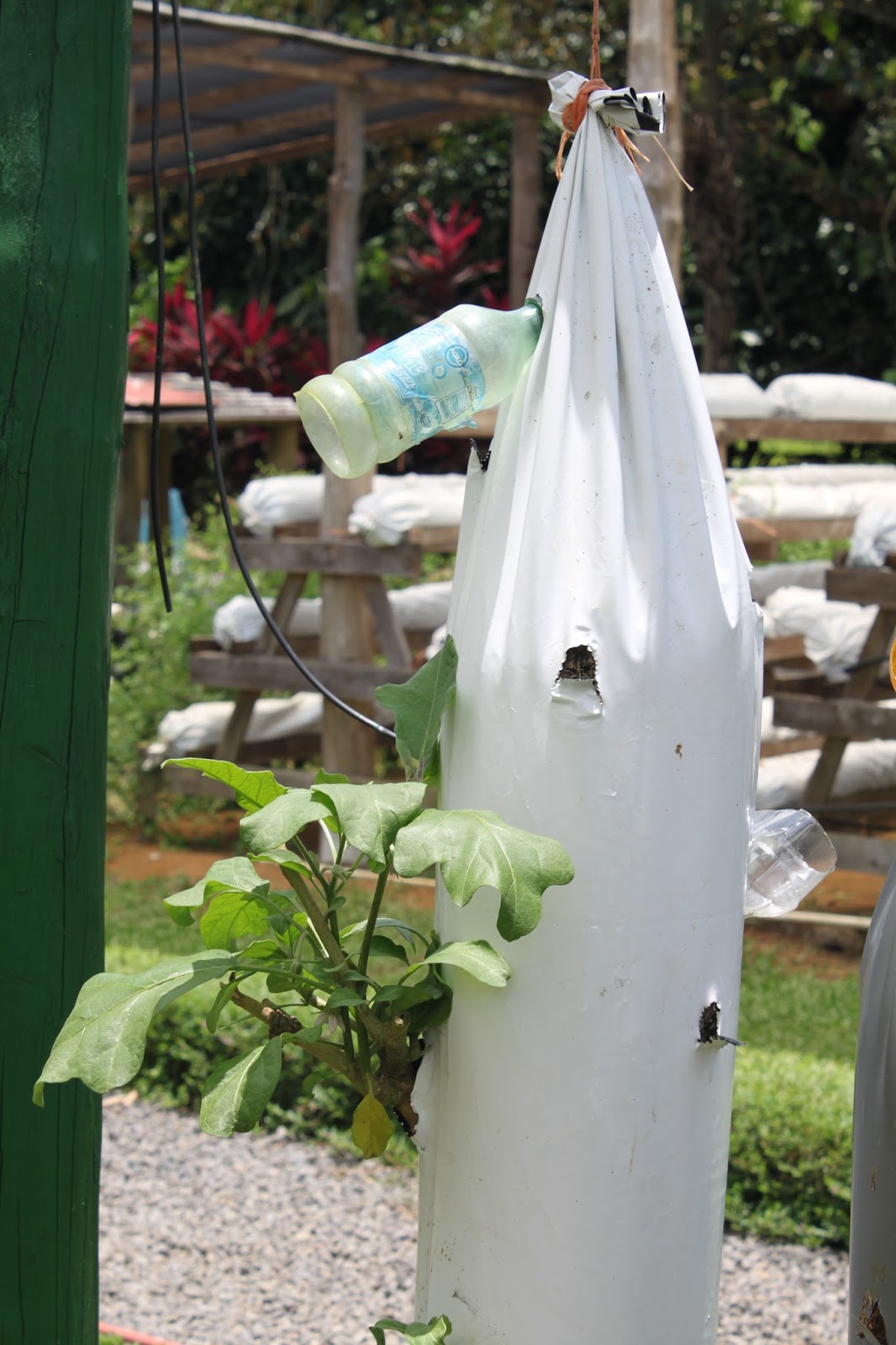
- you can use strong mesh bags, jeans or anything sturdy enough to hold up soil, cut a "v" shape into the sides of the bag, and put a nice cherry tomato plant in.
- Mixed Cropping
- Plants often complement each other. For example, coffee waste can be used to grow mushrooms!

This is a parrot made from a tire!


IBGYBG
Familiar with the acronymn IBGYBG? Well the bankers who sent us into the economic crisis are. They ended their emails with IBGYBG- I'll be gone, you'll be gone. In other words, ultimately, the world problems that large industries such as oil, coal and bankers have created will be our (the youth's) problem.
And that's the short term thinking that has gotten us into almost every problem- economic, social and environmental.
Al Gore brought this acronym to our attention when he was discussing climate change. The problems that we face involving global warming are so enormous that the "IBGYBG" way of thinking, will only lead us farther into the mess. It is time we start thinking long term. It is time we stop solely thinking of money, and start thinking of the well being of society. We can no longer ignore signs of climate change- such as the droughts that swept the west or the hurricanes that are wiping out the East coast. In The Inconvienent Truth, Gore states that if we continue on this path of destruction, the city of Manhattan will become flooded. Sure enough, Hurricane Sandy proved just that. Scientists predicted to the date the flooding of New Orleans, and sure enough Hurricane Katrina was on its way.
For the people that deny climate change and say that it is still cold, if not colder than it was last year, I have a few questions for you. Why are the number of record breaking temperatures 1:115 when comparing cold temperatures to hot? Why would 97-98% of scientists agree that climate change is occuring and that it is a serious environmental problem?
This is not something we can just ignore. This is not a problem that we can afford to think short-term about. This is reality.
Gore recommended a way was by learning about the youth-lead Climate Reality Project and checking out realitydrop.org.
As for me, I want to take the next step to learn more about Climate Change by reading his most recent book, "The Future."

Subscribe to:
Posts (Atom)