Home

Sunday, May 5, 2013

Pura Vida


Paint a picture of paradise. Then go to Tortuguero, Costa Rica and I guarantee, your picture will look identical to this setting. You want a word for it? I'll give you two: Pura Vida.

Pura Vida, literally meaning "pure life," makes up 50% of the Spanish spoken in Costa Rica. It is a greeting, conversation starter, and answer to almost any question. But more than that, it describes the people’s way of life.
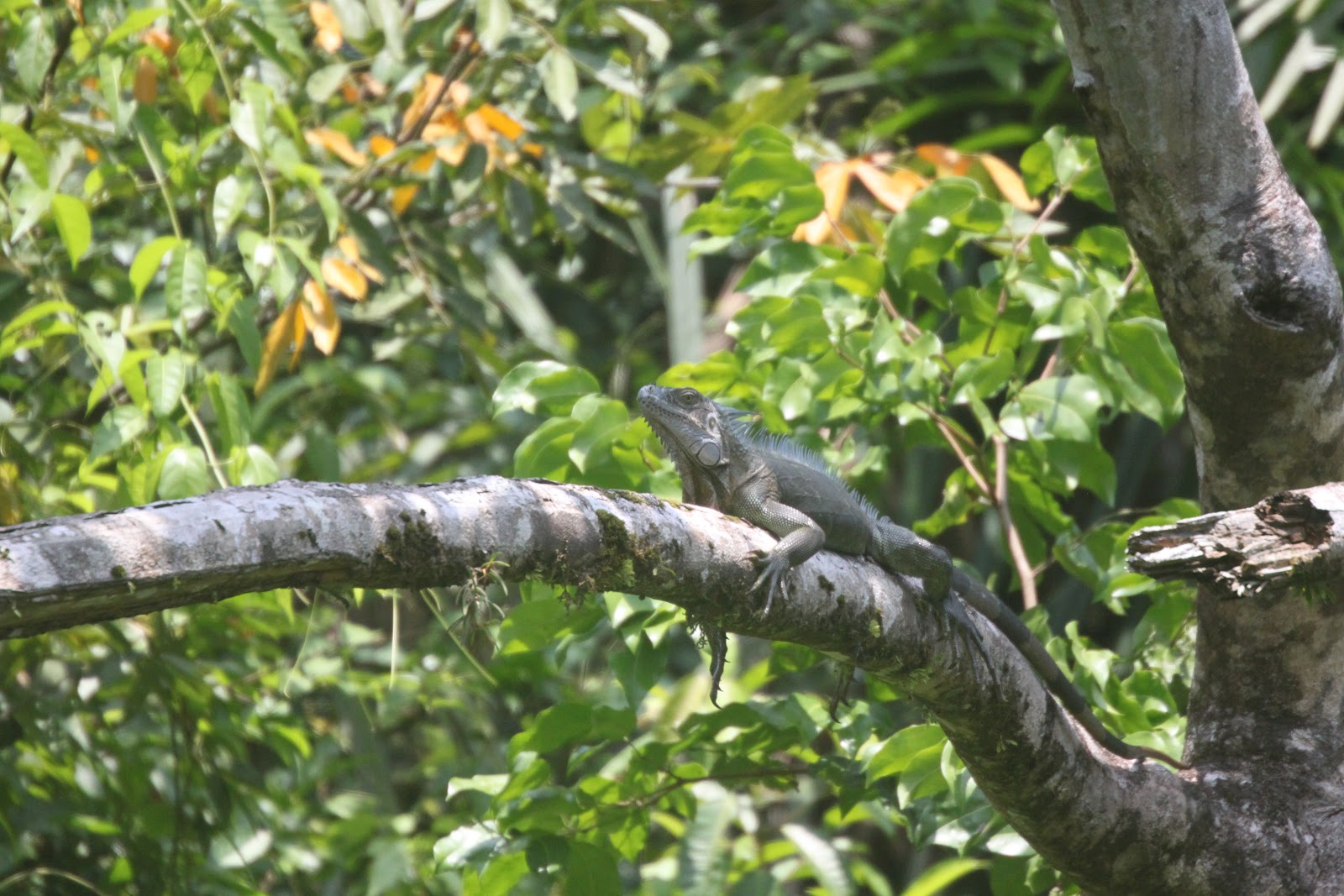


It explains the mystifying beauty which encompasses Tortuguero.
One morning, Jimmy (our tour guide) took us on a boat tour through the Cano Palma. Lush green trees towered over the rich underbrush. Beyond the sight of the mangroves hid the mystery of the rain forest with over 11,000 birds and thousands of amphibians. If you looked close enough, you could spot the Jesus Christ lizard camouflaged among the emerald leaves. And in this paradise, we heard the hoots of the owls and the mating sounds of the birds.

It was here that we realized that we are just one piece of the puzzle. In suburban Northern Virginia, it is too easy to forget this. We are so busy rushing to soccer practice and cramming for tests that we often do not think about how our small actions affect something on the other side of the world. For instance a plastic bag. Convenient, clean, easy, right? Not for the beaches it washes onto; not for the water receiving harmful chemicals; not for the sea turtles who think it is a jellyfish. We are often forced into this rushed lifestyle where speed is prioritized over sustainable, superficial over natural. But does it really need to be this way?  Imagine if we could change our ways just like Costa Rica has changed theirs, to focus around one simple rule- Pura Vida.
Here, it has not always been that way, but over time the people of Costa Rica realized that if they embraced nature and utilized its resources instead of destroying them, they would be successful, and happy.

They realized that nature is beautiful and irreplaceable, and they worked to keep it that way. For example, over 25% of all land in Costa Rica belongs to state parks. Instead of building a road, people take boats to get around Tortuguero because a road would cut through this serene scene. The men work as boat drivers and tour guides instead of loggers. The live sea turtles act as a larger source of revenue than the dead ones. The sustainable cycle of eco-tourism continues.  


By embracing nature, and taking advantage of the greatest gift it offers, beauty, Costa Rica is able to preserve such vital resources, and maintain a stable economy. My hope is that developing countries throughout the world can learn from Costa Rica. Instead of following the ways of the past which include excessive logging and deforestation, these countries can be a step ahead and recognize that nature offers not only beauty but the path for a thriving economy. Like ants and trees, flowers and bees, success and nature offer a symbiotic relationship.

 
And isn't that what Pura Vida is all about?

 
Many thanks for this picture and many of the others:  Elizabeth Hurley and EF Educational Tours


Severn Cullis Suzuki

If you replace the "S" with "R" and add some letters to Severn, you can get the word Reverend, and that's exactly how I felt about Ms. Severn Cullis Suzuki. I have never meet someone in my life who was so blunt yet inspiring, young yet sapient. Ms. Suzuki, at age 12 silenced a room of adults at the UN Conference in Rio, opening their eyes to the truth of their actions (See speech here: http://www.youtube.com/watch?v=hsNDnII_Wmo) . Yesterday, she did the same with us. Except for us, she had a slightly different message. We are youth, so we have the power to make a change. Adults are most vulernable to us, their children, which is why we have the greatest chance in creating change. With an increasing amount of corrupt government (corrupt in the fact that corporations not people's voices are being heard - aka recent background check bill), the voice of the youth need to be heard. She recommended government protests with 350.org and petitions. She worked with a youth-driven group named Wecanadia to come up with government proposals for change. Here are their recommendations...
1) "Measuring what matters"
the GDP is the measurement used for global rankings, yet it doesn't measure citizen's happiness- only how much money the government is making. For example, when a person gets in a car accident, they need an ambulance, hospital assistance, ect., so the countires GDP increases, but are the people better- NO!
2) Get Prices Right
There needs to be a price on carbon!
3) Fair Trade Certified ProductsThe government would add this into their economic plans to buy from workers treated fairly!
Yet, even though these solutions seem easy enough, nowadays, these solutions are almost impossible. Everyday countries are moving away from mandatory environmental regulations to "suggestions." Basically, we are headed in the wrong direction, and in order for our planet to survive, we need to change our ways NOW.


Tips for tourists!

First of all, if you are reading this post I want to congratulate you because you are thinking of (or planning to) go to Costa Rica! And let me tell you that Costa Rica has so much to offer- so I hope you have a great time! Here are some tips to make your trip even better!

Make sure you bring...

  • a light raincoat (VERY IMPORTANT)
  • bug spray
  • a reusable waterbottle
  • bathing suit
  • sneakers (hiking boats if you really want to go on an adventure!)
  • a journal to write everything down
  • lots of socks!


What most tour guides don't tell you...

  • Often, toilet paper goes in TRASH CAN not toilets (toilet leads to clogging) 


Sunday, April 21, 2013

Top three Policy Suggestions from Al Gore


1) Carbon tax- people don't think about what they get for free. By charging for carbon, people will be more aware of their impact and more conscientious to control their output.

2) Subsidize renewable energy. By making the price more competitive sooner, the use of renewable energy will increase exponentially.

3) We can pay for these costs by eliminating the $500 billion subsidizes the US government gives to coal and oil companies every year. Basically all we are doing right now is paying the polluters!


Saturday, April 20, 2013

Two Sides of the Same Coin: Environment and Profit

Many people argue that the only way you can make money from nature is by cutting it down. Others claim that maintaining nature requires an abundant amount of money. If you are one of these people this article is for you- because from these past few days I have learned a very simple lesson: nature and profit are two sides of the same coin. The people in Costa Rica have learned this lesson much faster than the rest of the world, and are benefiting from it everyday.

Two days ago, we were lucky enough to go to the recycling center in Tortoguero. In it was everything imaginable- plastic bottles grinded up into small pieces, cardboard boxes stacked on top of each other, compost barrels filled with worms and banana peals. It turned out that all garbage in Tortoguero came to this small center, and EVERYTHING was used. Not only that, but once everything was cleaned, it was sold to the town and companies. In simple terms- the town was benefiting from its waste.  Why? Because the town was open to change. Politics didn't come in the way of compromise and sustainability. Around the town lay houses with plastic bottles acting as the home for cherry tomato plants and fresh aregano. As we walked past a classroom, we stopped in and said "Hola." Even here, the sustainabilty movement was present- tables were made from recyclable plastic, several types of recycle was present in colorfully decorated barrels, and the students were learning in their curriculum about the environment. Revolutionary. Creative. So simple. 

Later that day, on our boat ride, Jimmy informed us that the Pacuare river alone is responsible for 5 million dollars a year in white water rafting; no cutting down is need, just utilizing the river the way nature created it. 

The next day, we took a night walk and were lucky enough to see a leatherback sea turtle giving birth, and once again I heard the same lesson. The lady from the Sea Turtle Conservancy informed us that the eco-tourism from watching and learning about sea turtles, created a much higher profit then harvesting them for soups. 

At Earth University, the students are way ahead of the game. They are utilizing their resources and saving money at the same time. The organically grown gardens are enclosed by colored water bottles, tires, bicycle wheels, even old rafts. They are planting crops such as lettuce and tomato which they will later use in the cafeteria.

Even the butterflies have brought in profit. The Costa Rican government has made more than 3.2 billion dollars from the butterfly restoration projects.

So, I have come to the conclusion that it is simple. Leave nature the way it was created, utilize its beauty and ability, and you will in turn make money.


Mustard Seeds

In our group, we use the phrase "mustard seeds" to describe the hope that we have for something greater in the future. We thought mustard seeds when we were taking a night walk on the beach looking for sea turtles and sure enough there was a female Leatherback. We were able to see this six foot long turtle give birth to 80 eggs- how? Mustard Seeds. When we were sleeping in the town of Arenal, Jimmy (our guide) told us to blow the clouds away and "think mustard seeds" in order to see the top of the volcano. Sure enough the next morning, just that happened. The belief in mustard seeds is something much bigger than a superstition, it is a way of believing in a better future. Today, as I get ready for the EF Summit, I have just that in mind.